


Key Takeaways:
- Support Your Cycle Naturally: Blood clots during your period can often be managed with simple lifestyle habits like nourishing meals, gentle movement, and rest.
- Iron And Vitamin C Are Your Baseline: Heavy menstrual bleeding pulls iron out with it, so pair iron-rich meals with vitamin C to help your body absorb it and head off the signs of anemia.
- Hydration Supports Circulation: Drink 4 to 6 extra glasses of water during your menstrual period. Well-hydrated blood moves more easily, which may mean less pooling and less formation of clots.
- Move Gently, Then Rest With Heat: A walk or restorative yoga keeps circulation going, and a heating pad eases painful periods. Neither will stop bleeding outright, but both make heavy days easier.
- Know Your Call-Someone Signs: Large clots the size of a quarter or bigger, soaking a pad or tampon every hour, or other symptoms of heavy flow are worth a call to your provider.
- Make Period Care More Sustainable: Reusable menstrual products from Saalt offer a low-waste, high-comfort alternative that supports both your body and the planet, because care should feel good in every way.
Period blood clots are common, especially on heavier days, but that doesn’t mean you have to settle for frustration or confusion.
So, here’s the short version of how to stop blood clots during your period naturally: eat iron alongside vitamin C, drink more water than feels strictly necessary, move gently, and put heat where it hurts.
Clots form when your flow is heavy enough to outrun the anticoagulants your body sends in to keep menstrual blood thin. There isn’t much to dissolve, exactly. The goal is supporting a steadier flow and replacing what heavy days take out of you.
It also helps to stop fighting your period products. A menstrual cup or disc holds far more than a pad, and clots pass through without the pulling, bunching, or hourly bathroom sprints.
Below, we’ll get into why heavy periods clot in the first place, the home remedies that earn their spot, how movement and rest fit in, and the point where heavy bleeding is worth a doctor’s time. Let’s get into it.

Why Heavy Periods Cause Clots
Heavy periods cause clots because your uterine lining sheds faster than your body’s natural blood thinners can keep up with. What’s left are those soft, jelly-like blood clots you tend to spot on day one or two.
So, are blood clots during periods normal? According to the National Health Service, passing occasional blood clots during your period isn’t necessarily a cause for concern. What changes the picture is volume.
Heavy menstrual bleeding, known clinically as menorrhagia, means more blood pooling before it exits, and more chances to clump.
Plenty of things can cause heavy menstrual bleeding:
- Fibroids
- Polyps
- Adenomyosis
- Endometriosis
- PCOS
- Thyroid conditions
- A copper IUD
- Low progesterone
For the full breakdown of normal menstrual clotting versus the kind worth flagging, head to what causes blood clots during your period.
Natural Remedies and Good Habits to Help Stop Blood Clots During Your Period
When your period feels heavier than usual, it’s natural to wonder if your diet might help lighten the load. According to Spire Healthcare, no specific food or supplement can directly reduce menstrual bleeding, but hydration and proper nutrition can still affect how you feel throughout a heavy cycle. Think of everything below as support, not a switch that turns your flow off:
Natural remedy |
What it actually does |
How to work it in |
|---|---|---|
Iron-rich foods |
Replaces the iron you lose to excessive bleeding |
Lean meats, oysters, tofu, spinach, beans, lentils |
Vitamin C |
Helps your body absorb more of that iron |
Citrus, strawberries, kiwi, bell peppers, broccoli |
Extra water |
Supports circulation and replaces lost volume |
4 to 6 extra glasses a day while you’re bleeding |
Gentle movement |
Keeps blood moving so it pools less |
Walking, restorative yoga, easy cycling |
Heat |
Relaxes the uterine muscle and eases cramps |
Heating pad or warm compress on your lower belly |
Prioritize Iron-Rich Foods
Heavy bleeding means you’re losing iron, an essential mineral carried by your red blood cells. Over time, this can leave you feeling extra tired. To help replenish iron naturally, choose to eat balanced meals that feature lean meats (chicken, turkey), seafood (oysters), and plant-based options (tofu, spinach, beans).
Iron-rich foods won’t reduce bleeding on their own, but they replace what heavy days take, which is what keeps your energy from bottoming out.
Spire Healthcare also recommends cooking these in a cast-iron pot, because foods can absorb iron from the pot.
However, be careful when doing this, as cooking every meal in cast-iron cookware could lead to eating more iron than you need.
Pair Iron With Vitamin C For Better Absorption
Vitamin C helps your body absorb more of the iron you just ate, so the simplest move is to put them in the same meal.
According to North West Gynaecology, iron and vitamin C work together to help prevent anemia and support strong, healthy blood vessels.
Add a splash of citrus or a serving of colorful veggies to your meals to support iron uptake.
Some great sources of vitamin C include:
- Oranges
- Strawberries
- Kiwi
- Red and green bell peppers
- Broccoli
- Brussels sprouts
- Tomato juice
Hydration Helps More Than You Think
Hydration matters because when you lose too much blood, you’re losing volume, not just iron, and thicker blood clots more readily.
Spire Healthcare recommends drinking 4 to 6 extra glasses of water during your period to help keep things flowing smoothly and support healthy circulation. Add in warm herbal teas or mineral-rich broths if you’re craving some variety.
A Note On Supplements
If it’s hard for you to get enough nutrients through food alone, supplements may be an option. But make sure to talk to your doctor before adding anything new. They can guide you toward what’s helpful, what’s not, and what might interact with any medications you already take.
Nourishment Is A Form Of Self-Respect
At Saalt, we believe that what you put in your body matters just as much as what you wear on it. Whether you’re adjusting your meals, slowing down for rest, or reaching for non-toxic period products made with your well-being in mind, your cycle deserves that extra layer of care.
Everybody is different, but honoring yours with supportive, nutrient-rich choices is always a step in the right direction. What to Limit During Heavy Clotting Days
High-Sodium & Processed Foods: Increase fluid retention and pelvic congestion.
Aspirin: Acts as an antiplatelet that can actually increase bleeding volume rather than regulating it.
Excess Alcohol & Dehydrating Drinks: Worsens blood viscosity.
Move With Purpose: Exercise And Rest to Help Get Rid of Period Blood Clots
If moving your body during your period sounds like the last thing you want to do, we totally get it. But intentional movement can be one of the most supportive things you offer your body.
Gentle Movement Improves Circulation
Movement helps because blood that keeps moving pools less, and pooled blood inside the uterus is exactly where clots take shape.
Movement also encourages your uterine muscles to contract more effectively, supporting a more complete menstrual flow. It doesn’t have to be intense.
A leisurely walk, restorative yoga, or stretching on the floor can go a long way toward making your cycle feel more manageable.
Rest Is Equally Powerful
Rest counts as much as movement, and heat is the easiest comfort you can reach for.
Your energy levels often dip during menstruation, and honoring that natural slowdown is part of supporting your body. Rest isn’t a sign of weakness; it’s a vital part of hormonal balance and whole-body resilience.
Curling up with a heating pad, shortening your usual workout routine, or simply saying no to a packed schedule could be exactly what your body needs right now, and you shouldn’t feel guilty about that.
Worth noting: A heating pad relaxes the uterine muscle and eases cramps, but it won’t change the amount of blood you lose. It just makes heavy days considerably more livable.
Move In A Way That Feels Good For You
The best movement during your period is whatever leaves you feeling better than when you started.
There’s no one-size-fits-all approach to movement during your cycle. Some days might call for a neighborhood walk or light cycling. Other days, child’s pose and deep breathing are more than enough.
What matters is tuning in and choosing movement that feels restorative, not depleting.
Movement Is Self-Compassion In Motion
Whether you're dancing in your living room, stretching between meetings, or taking intentional time to rest, you're supporting your body with kindness. And when paired with comfortable, breathable period underwear, your entire routine can feel more aligned with your body and your values.
Your cycle doesn’t ask for perfection; it asks for presence. Move and rest as you need to, and trust that both are part of the rhythm your body knows best.
When Heavy Bleeding and Clots Need a Doctor
Home habits help you cope with heavy periods. They don’t diagnose what’s behind them, and untreated heavy menstrual bleeding can be serious, mostly because of what sustained heavy blood loss does to your iron levels.
Signs It’s Time To See a Doctor
See a doctor if heavy bleeding during your period looks like any of the following:
- Clots that are the size of a quarter or larger, showing up regularly
- Soaking through a pad or tampon every hour for several hours in a row
- Bleeding and clots that stretch past seven days
- Painful periods that keep you from work, school, or sleep
- Signs of anemia: dizziness, breathlessness, a racing heart, or unusual fatigue
- Uterine bleeding between cycles, after sex, or after menopause
- Sudden changes in your period that don’t settle after a cycle or two
It also helps to bring numbers. Tracking how much blood you’re losing, how often you change products, and which menstrual symptoms show up alongside the bleeding gives your provider far more to work with than “it’s been heavy.”
What Doctors Can Do To Reduce Heavy Bleeding
There’s no natural way to stop heavy periods entirely, but doctors can treat heavy bleeding directly, with several options that reduce your bleeding.
Nonsteroidal anti-inflammatory drugs like ibuprofen may modestly reduce heavy bleeding while taking the edge off cramps. Hormonal birth control, a hormonal IUD, or prescription medication for heavy flow can thin the lining over time. Where excessive bleeding traces back to fibroids or polyps, procedures are on the table too.
Which treatment for this condition makes sense depends entirely on the causes of heavy flow in your case. Conditions that can cause heavy, clot-y cycles are common and treatable, so it’s worth going in to get a diagnosis and treatment plan rather than guessing at home. Excessive blood loss month after month isn’t something you have to white-knuckle.
Make The Switch: Cups And Discs For Heavy Flow With Clots
Heavy periods and blood clots can feel frustrating, unpredictable, and sometimes isolating. But supporting your cycle starts with small, intentional acts of care: drinking plenty of water, eating nourishing foods, moving purposefully, resting, and using the right period care products.
Your routine should keep you feeling comfortable, dry, and protected; that’s what really matters.
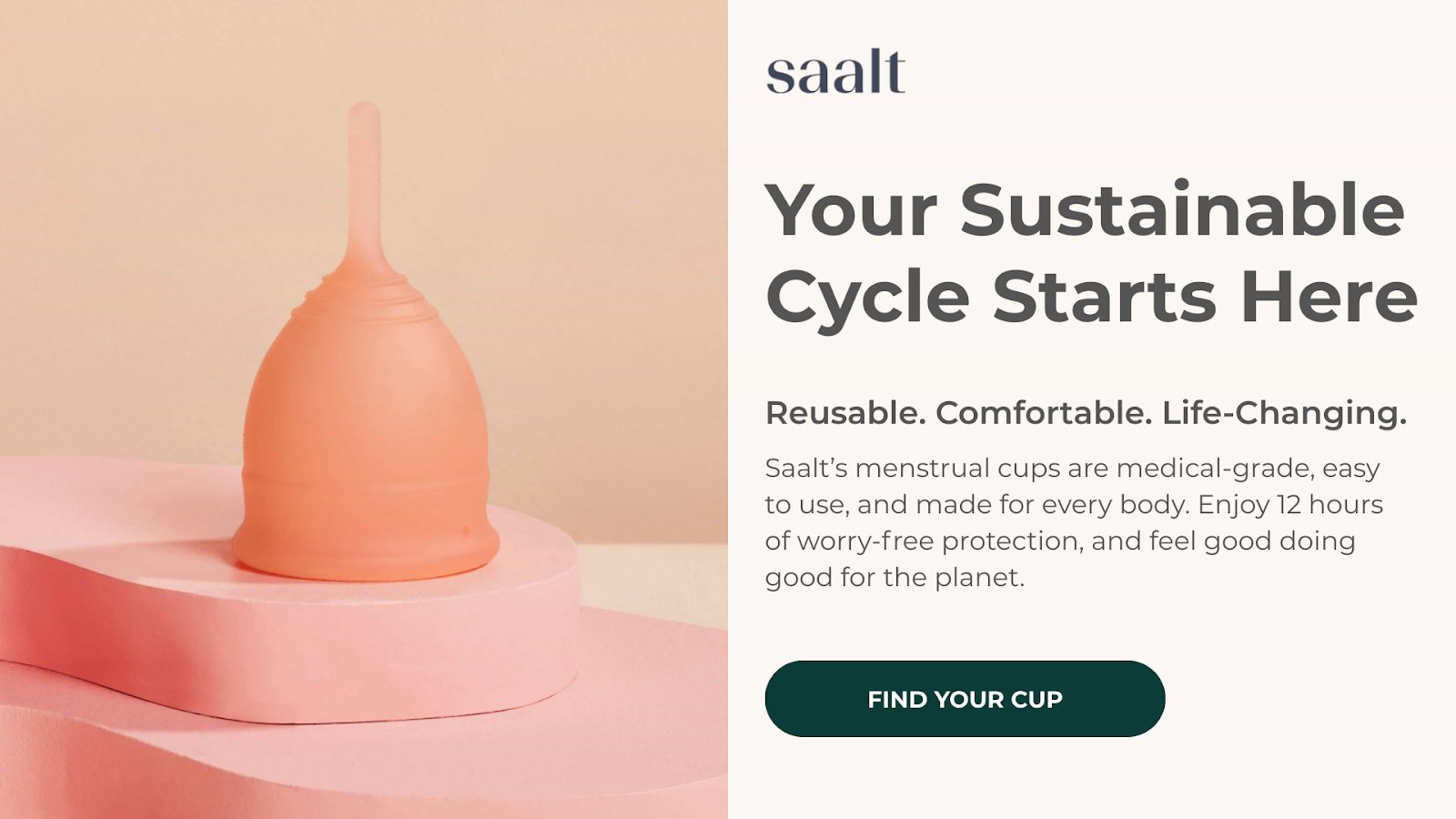
The Saalt Cup collects your flow instead of soaking it up, so clots pass through without the drag. The Regular holds about 30 mL, roughly 3 to 4 tampons’ worth. If your flow outpaces that, the Regular Saalt Disc holds about 50 mL, around 5 to 6 tampons, and sits at the base of your cervix. Either can stay in for up to 12 hours before you remove and empty it, which is a genuinely different way to manage heavy periods.
Want backup? Saalt’s period underwear for heavy flow layers underneath, and Super absorbency holds 8+ tampons or 6+ pads worth on its own. Sizing runs from XXS to 4X, so there’s a fit for every body.
Because your period care should never hold you back, it should carry you forward.
Read also:
- Why Does Sex Feel Different During Different Phases Of The Menstrual Cycle
- Why Do I Skip My Period Sometimes?
- Does Period Underwear Smell?
Frequently Asked Questions About How To Stop Blood Clots During Your Period Naturally
How can I get rid of period blood clots naturally?
You can’t dissolve a clot that has already formed, but you can support a steadier flow: eat iron-rich meals with vitamin C, drink 4 to 6 extra glasses of water a day, move gently, and use heat for cramps. If large clots keep showing up cycle after cycle, that’s a conversation with your provider rather than a home remedy.
How to dissolve blood clots in the uterus naturally?
There’s no food, tea, or supplement that dissolves clots inside the uterus. Your body already makes the enzymes for that job; clots simply appear when your flow outpaces them. Focus instead on habits that support a manageable flow, and on getting a diagnosis and treatment if menorrhagia has become your normal.
Is it normal to have blood clots during my period?
Yes, seeing small blood clots during your period is a common experience, especially on your heaviest days. Clots form when your body sheds the uterine lining faster than your natural anticoagulants can keep up. For most people, clots smaller than a quarter are considered normal and nothing to worry about.
When should I be concerned about blood clots during my period?
Trust your gut. If you’re consistently passing clots larger than a quarter, needing to change your period products more often than every 1–2 hours, or feeling lightheaded or unusually tired, it’s time to talk with your healthcare provider. These could be signs of a heavier-than-average flow or another condition that deserves attention.
Does heat application reduce the risk of blood clots during menstruation?
Using a heating pad or warm compress is a great way to relax tight uterine muscles and ease cramps, but it doesn’t directly affect clotting. Still, heat can help your body feel more supported and comfortable during menstruation.
Do hydration levels impact blood clot formation?
Yes! Staying well hydrated supports healthy blood flow. Dehydration can lead to thicker blood, making clotting more likely. During your period, try to drink extra water to keep your body feeling balanced.
How can I track my menstrual cycle to better manage clotting issues?
Tracking your cycle via an app, journal, or calendar is one of your most empowering tools. By logging flow levels, clot size, symptoms, and patterns over time, you’ll gain clearer insights into what’s normal for your body and when to seek extra support. This info can also help your provider give more personalized care if needed.
Can stress influence blood clots during menstruation?
Absolutely. Stress can disrupt hormone regulation, which may impact how much and how heavily you bleed. That, in turn, can affect whether you see more clots. Building in time to rest, reset, and de-stress—whether that’s a walk, breathwork, or journaling—can support more consistent cycles and a stronger mind-body connection.
How do I prevent blood clots during my period?
You can’t prevent them entirely, and small ones aren’t a problem in the first place. What helps: staying hydrated so blood moves more easily, keeping circulation up with gentle movement, and not letting menstrual blood sit for hours in a saturated product. Changing or emptying your period care regularly makes a real difference in how much clotting you notice.
What can I drink to stop blood clots?
Water, first and honestly. Dehydration thickens blood, and thicker blood clots more readily. Warm herbal teas like ginger or chamomile can ease cramps, and mineral-rich broths help replace what you’re losing. No drink will stop bleeding, but staying well-hydrated genuinely supports smoother flow.
What’s the best menstrual cup or disc for heavy periods with clots?
For heavy flow with clots, reach for the Regular Saalt Cup (about 30 mL) or the Regular Saalt Disc (about 50 mL). Both collect rather than absorb, so clots pass through easily, and either can be worn up to 12 hours before you remove and empty it. A Saalt Cup or Disc can last for up to 10 years, and layering leakproof period underwear underneath covers your heaviest nights.
Medical Disclaimer: The information provided in this article is for educational and informational purposes only and is not intended as medical advice, diagnosis, or treatment. Always seek the advice of a physician, gynecologist, or other qualified healthcare provider with any questions you may have regarding a medical condition, vaginal health, or the compatibility of reusable menstrual products with your body. Never disregard professional medical advice or delay seeking it because of something you have read on this website. If you think you may have a medical emergency, immediately contact a doctor or call your local emergency services.


