


Key Takeaways:
- Know The Signs: Understanding the typical age range and signs of a first period helps parents and tweens approach this milestone with confidence and clarity.
- Normalize Every Experience: Emphasizing that there is no single “right” age for a first period can help reduce stress and encourage healthy conversations.
- Create Open Dialogue: Starting conversations with honesty and openness fosters a supportive environment where tweens feel empowered and prepared.
How was it when you got your first period? Maybe it came on suddenly, left you feeling nervous or excited, or caught you completely off guard. For parents and tweens alike, this moment can shape how someone feels about their body for years. So, how do we make it less intimidating and more comfortable? If you’re asking, “When do girls get their period?” or noticing signs your child might be close, the goal is to prepare in a way that feels empowering and reassuring.
At Saalt, we know that periods are natural and nothing to be ashamed of. No matter what, your child deserves to feel ready when the time comes. Whether you’re a parent supporting your child, a tween learning about your body, or someone guiding a loved one through this milestone, this guide is a safe space for you to gain clear answers and soften worries. We’ve made it our mission to simplify period care, and that starts with open conversations like this one.
Let’s get into everything you need to know about the timing of that all-important first period, and how to prepare for it with optimism and the courage to learn your body’s natural rhythms.
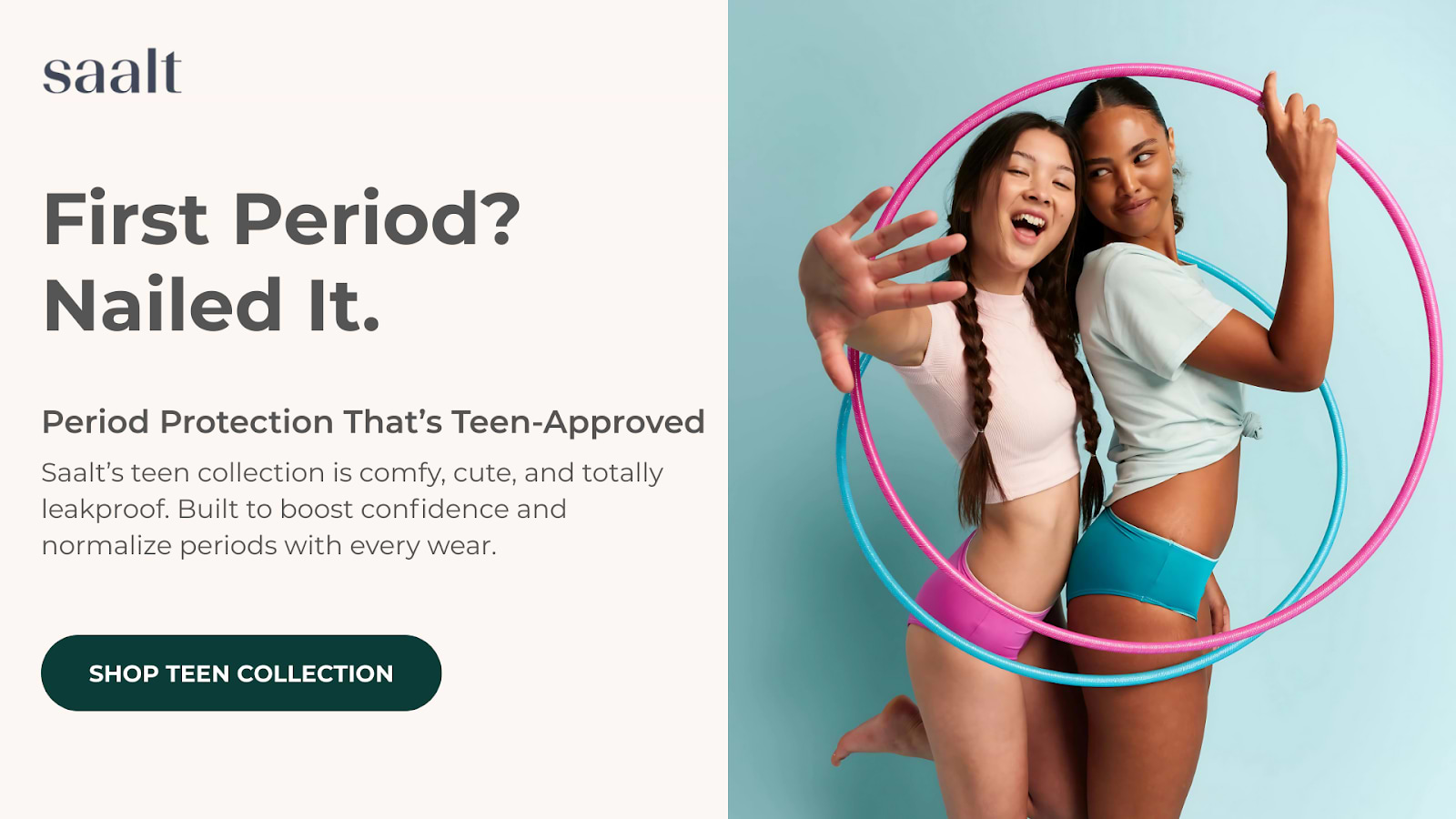
Why Do Girls Get Periods?
A period is your body’s natural way of showing that puberty is underway and your reproductive system is working as it should. Each month, hormones like estrogen and progesterone tell the uterus to build a soft lining designed to nourish a fertilized egg. If no egg is fertilized, that lining sheds and leaves the body as menstrual blood, which is what we call a period. This cycle usually takes about a month and repeats itself. That explains why periods typically happen every 4–5 weeks. While they may seem scary at first, periods are a healthy and normal part of growing up!
At What Age Do You Get Your Period?
If it feels like you started your cycle before your mom did, it’s not all in your head. Historically, the average age of a first period (called menarche) has changed over time. In fact, the University of California, San Francisco Department of Epidemiology & Biostatistics notes that in the 1890s, most girls didn’t menstruate until around 17. By the 1950s, that age dropped to about 12, largely due to improved nutrition and health.
Today, researchers point to a mix of influences, such as genetics, body mass index, and environmental or social factors, that can play a role in when periods begin. That being said, there’s no single “right” age to start your period. It’s completely normal for it to arrive earlier or later because everyone has a unique rhythm and timeline. Your body (or your child’s body) is simply moving at the pace it was meant to.
Signs Your Daughter Is About To Start Her Period
Your body often drops little hints before a first period arrives, and recognizing them can make the transition less surprising. Breast development is usually one of the earliest signs, and most teens get their first period about two years after their breasts begin to grow. Other common signals include the appearance of hair in your underarms or private parts, a noticeable growth spurt, or spotting vaginal discharge. Discharge kind of looks and feels like mucus, typically showing up about 6–12 months before a first period. These changes are all your body’s way of preparing for menstruation, and a totally normal part of puberty.
However, if you or your child hasn’t gotten their first period by age 16 or if early signs of puberty haven’t started by age 13, it’s a good idea to chat with a healthcare provider. Otherwise, trust the process! Bodies are personal, and each one works on its own schedule.
How To Start The Period Conversation With Your Child
It’s normal to feel uncertain about how to bring up periods. After all, many parents carry memories of awkward or hushed conversations from their own childhood. But this is your opportunity to start fresh with a more positive tone: one that’s rooted in openness, trust, and empowerment.
Begin With Honesty
Periods are as natural as breathing, and your child deserves to know that. Pick a comfy, private setting like their bedroom, and sit down together to discuss what they’ve heard or believe about a period for girls. Listening closely is just as important as talking. If needed, you can gently correct any misconceptions while easing their fears.
Keep The Door Open
Encourage your child to ask questions, no matter how small or big they seem. Let them set the pace, and share your own stories if you feel comfortable. Being real about what you found confusing, surprising, or funny can make the topic feel more lighthearted. Remind them that everyone’s body has its own timeline, and there’s no “right” or “wrong” way to experience puberty.
Bring It Into Daily Life
While it might be uncomfortable at first, once you get the ball rolling, it becomes easier and easier to talk about periods. One easy way to normalize it is by framing it like another form of basic hygiene, like washing your hands or brushing your teeth. It’s also helpful to discuss what a period looks like in day-to-day life: how the body changes, possible feelings, and practical tips for managing it.
Above all, let your child know that these changes simply mean that they’re growing into a healthy adult. You could also validate their feelings by telling them that it’s completely normal to feel a mix of curiosity, nerves, and even excitement about this new stage. With your compassion and their curiosity guiding the conversation, your child will feel supported and ready for this new chapter.
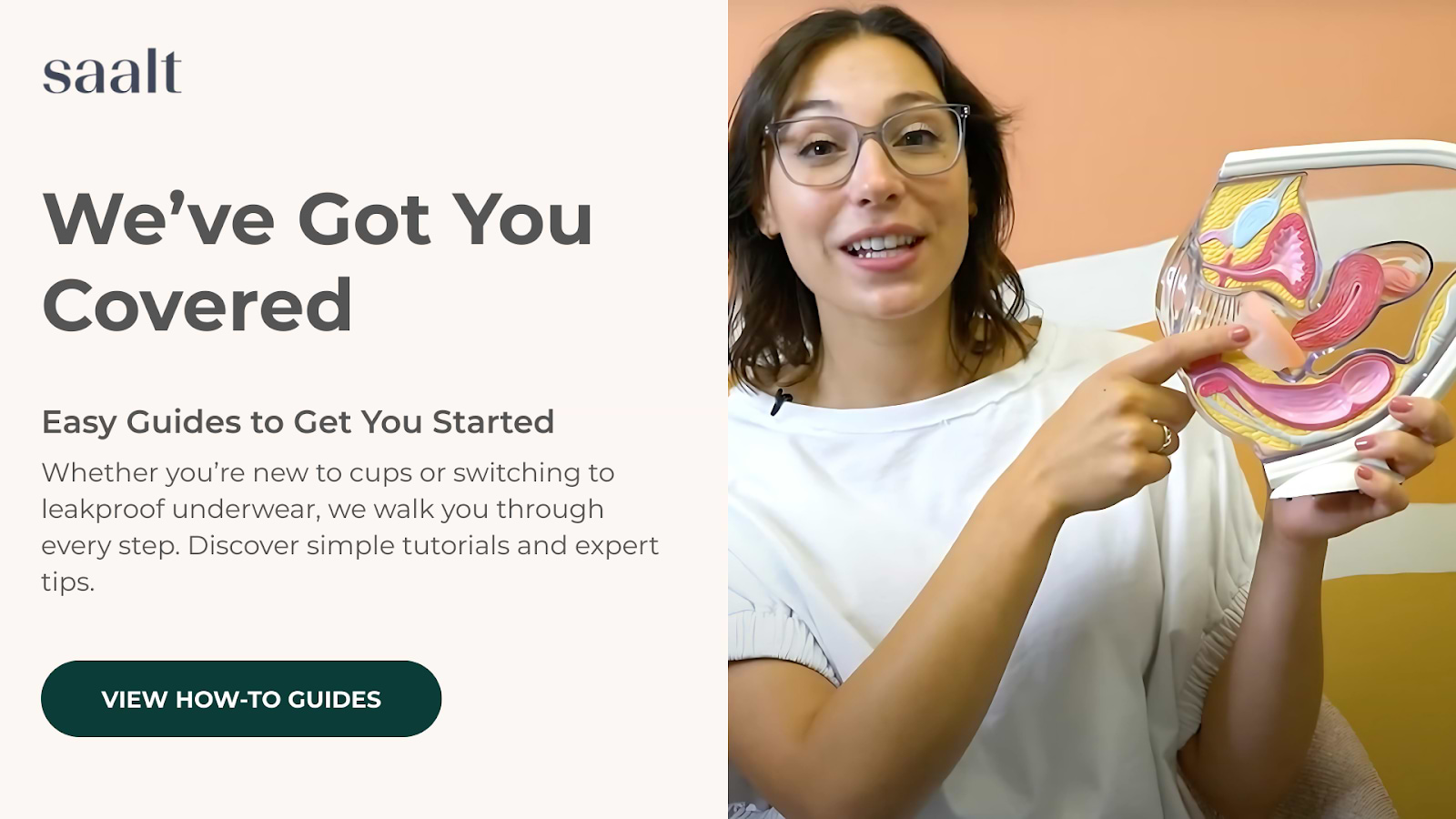
Building A First-Period Kit Together
Putting together a first-period kit can be a powerful way to celebrate this important milestone and make it feel less overwhelming. While you work together, remind them that periods are a healthy, natural part of growing up, and learning how to care for their body is an act of strength, not something to hide.
For teens and tweens with strong eco-conscious values, reusable options like period underwear, a menstrual cup, or a period disc are an empowering choice. They not only cut down on the waste of single-use pads and tampons but also provide long-lasting, reliable protection.
School, Sports, And Sleepovers: Staying Leak-Proof Everywhere
The best period kits offer peace of mind. All your child has to do is slip a spare pair of teen period underwear or a Saalt Teen Cup in their backpack, and they’ll be ready for anything. As a familiar external option, we highly recommend starting with leakproof period underwear. It looks and feels just like their go-to pair of everyday undies (but better). The super-absorbent, patent-pending gusset technology allows them to easily move through all of life’s moments without fear of leaks or stains. Plus, they have the flexibility to change into a fresh pair whenever they feel the need!
Supporting Body Confidence Through Puberty
A first-period kit can also help nurture body confidence during a time of big changes. Let your teen help choose what goes inside, whether it’s a pair of their favorite style of period underwear or a small journal for jotting down cycle notes or questions. A pack of Saalt Wipes or a light snack can also be comforting extras for those moments when a pick-me-up is needed. Being part of the process gives them a sense of ownership, helping them feel in control of their body and experience.
Make The Switch
Talking about when girls get their period without shame is a powerful step toward reshaping how we think about this milestone. Instead of fear or secrecy, anyone who experiences a period deserves to speak about it openly and receive the support they need. Whether your tween is nervously waiting for their first cycle or has just started experiencing puberty changes, the reassurance that they’re not alone makes all the difference.
At Saalt, we’re on a mission to replace period panic with empowerment. Through sustainable options like reusable menstrual cups, discs, and leakproof period underwear, we make it easier to find products that feel comfortable and safe without the unnecessary waste. By choosing products that respect both body and planet, we can create a future where every cycle feels supported and celebrated.
Periods are a natural and beautiful part of life. Your encouragement, honesty, and presence can help your daughter (or any young person in your care) approach puberty with pride rather than uncertainty. With the right knowledge and tools, periods can become an opportunity to build self-confidence and embrace body awareness. That’s how we can spark positive change, together.
Read also:
- Talking To Your Teen About Periods 101
- Are Teens Getting Their Period Earlier Than They Used To?
- Meet The Saalt Wear Teen Sport Short: The Leakproof Shorts Designed For Movement
Frequently Asked Questions About When Girls Get Their Period
When do most girls get their first period?
Most girls experience menarche between ages 9 and 15, with the average age landing around 12. Every body moves at its own pace, and puberty unfolds on a unique timeline. That means there’s no single “normal” age for a first period.
Can girls get their period before age 10?
While less common, some girls may get their first period as early as age 8 or 9. Early menstruation is still a normal and healthy part of puberty, but if menstruation begins before age 8, it’s a good idea to check in with a healthcare provider. The most important step is keeping open, reassuring conversations going. Feeling informed and supported helps both parents and kids approach these changes with confidence.
Is it normal to start a period as late as 15 or 16?
Absolutely! While many start earlier, some teens don’t get their first period until 15 or even 16. Genetics, activity levels, and overall health can all influence timing. If there are no signs of puberty by age 13 or if menstruation hasn’t started by 16, a healthcare provider can offer specific guidance. But most of the time, it’s just the body working on its own schedule.
Will my child’s periods be regular right away?
Not usually. First periods are often irregular, and cycles can take months (or even years) to settle into a predictable pattern. Early cycles may range anywhere from 21 to 45 days, and flow levels can vary from month to month. This unpredictability is a normal part of the body adjusting to new hormone rhythms.
How long does a girl’s first period usually last?
A first period usually lasts 2 to 7 days. Some may only have a few light days, while others experience heavier flow for longer. Both ends of the spectrum are perfectly valid! Every person’s experience is different, and that’s okay.
How can I tell if my daughter is about to start her period?
Certain changes often signal that periods are on the horizon. Breast development, the appearance of pubic or underarm hair, and sometimes clear or whitish vaginal discharge can appear in the months or year before menstruation begins. These shifts can feel unfamiliar, but they’re all part of the healthy changes that come with puberty. Patience, reassurance, and preparedness go a long way in helping tweens feel supported through the process.


